Tuesday, August 24, 2010

Preparing for Kindergarten

Kindergarten is such a wonderful time in a child's schooling. I, however, was very nervous about beginning this journey!:) Give me a high school class of Seniors and I am comfortable, but Kindergarten is another story!

I was overwhelmed with the pressure to get it right: the reading, the handwriting, and the math. The reading was the most intimidating to me. What if I messed them up somehow? Could I ruin their whole school career in one year? I wish someone had been there to tell me to RELAX!

Kindergarten is a year of exploration for you and your child. Your child gets his first taste of "school" and you begin to learn things about your child that you never knew before. Is he good at scientific thinking or mathematical manipulations? Does he love books or drawing? It is truly a magical time that goes by too fast.

My advice in a nutshell is to enjoy the wonder that is in your child's eyes. Read with them and explore God's universe with them. Unit studies and lapbooks are a great tool for homeschool teachers. This time goes by so quickly and then you are faced with "curriculum" that must be completed.

Here are a few sites that might be helpful in your journey:

http://www.lapbooklessons.com/FreeLapbooks.html
http://houseofliterature.tripod.com/id7.html
http://www.squidoo.com/lapbookthemes
http://www.homeschoolshare.com/Lapbooks_at_HSS.php
http://www.angelfire.com/pa4/weslanco/
http://homeschooling.about.com/od/unitslevelk3/Unit_Studies_by_Grade_Level_Grades_K3.htm
http://www.homeschoolhelperonline.com/units.htm
http://www.lessonplanz.com/
http://www.ehow.com/how_5667705_homeschool-kindergarten-child-almost.html

There are also a number of great books that I have used in our homeschooling that I would recommend:

Phonics Pathways
The Scientist's Apprentice
A Story of the World
Apologia Beginner's Science
Bob Books
Handwriting without Tears
Explode the Code
Math U See (love the manipulatives)
Sonlight Read Alouds

This is a great time to use games to augment your learning. You can reinforce letters, numbers, etc... or focus on good sportsmanship. Here are a few that I recommend:

Boggle Letters
Boggle Numbers
Letter Soup
Hi Ho Cherry-O
Candyland
Uno
Bingo (you can make letter bingo, number bingo, shapes bingo...)

When you are looking at Kindergarten remember that life is full of learning opportunities. Look around you.

Zoology Projects

For the culmination of our Zoology study (Land Animals), we decided to produce a few wildlife videos. The basics of what we did were this: each child picked an animal that we studied this year and wrote out interesting facts about the animal and their feeding and habitat. Then, we paid a visit to our local zoo and videoed each animal that they had chosen.

After we got back home and examined our footage, we realized that we need to add more information to make the video more interesting. The kids did a little more research on their animals and then we went to the park to film a bit more.

Creating the final product was a learning experience in itself! I used Microsoft Movie Maker and of course my oldest figured it out quickly. I then uploaded our finished projects on to TeacherTube.

Please check them out under the key words "Meerkat", "Giant Panda", or "Komodo Dragon". The account is under "Mrsbwrite".

http://www.teachertube.com/members/viewVideo.php?video_id=186412&title=Meerkat

Thursday, April 15, 2010

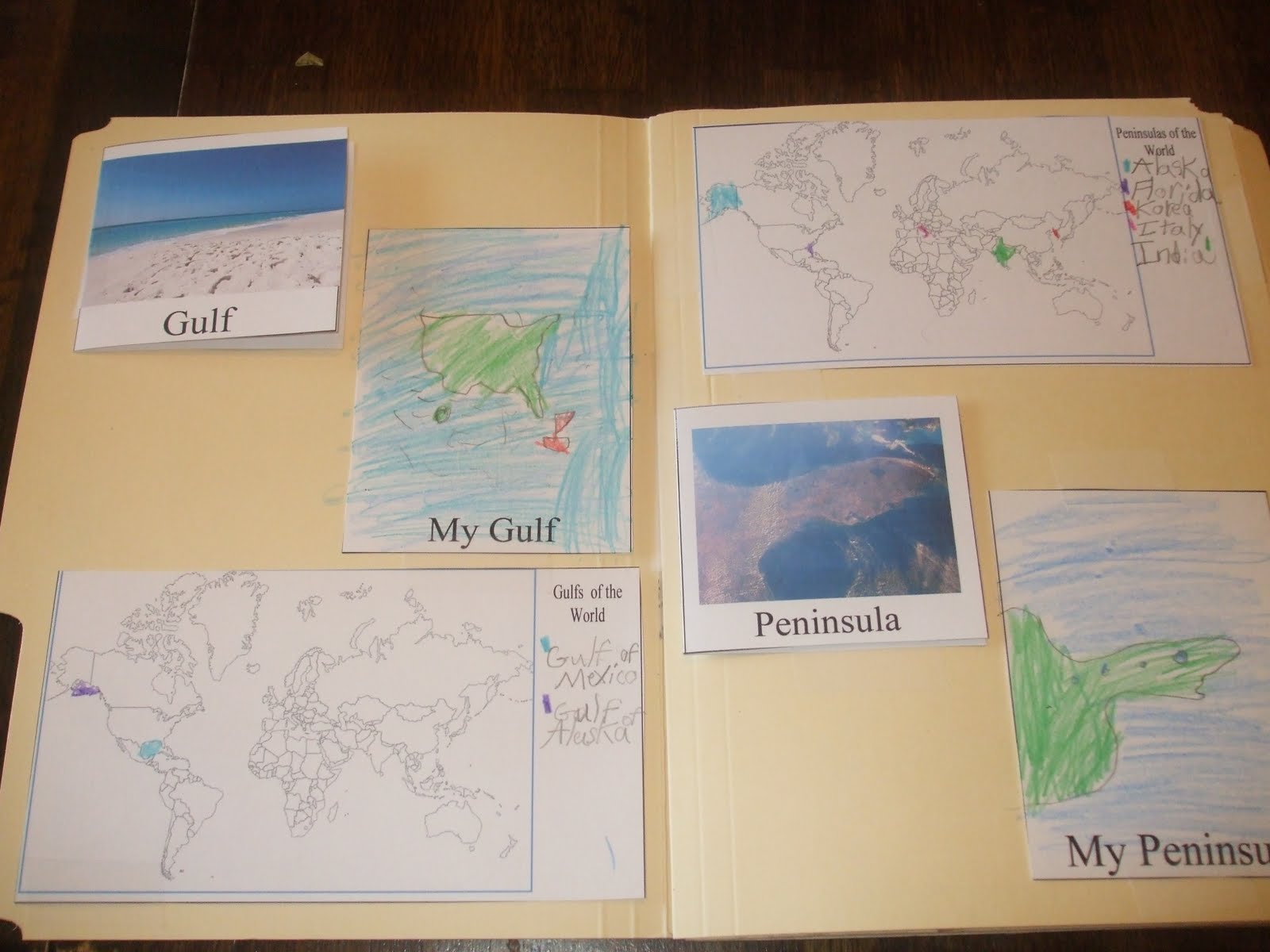
Landforms Lapbook

Imagine my shock and surprise when my child was working on an assignment and had no idea what a plateau was! Well, I knew that I must take action and teach this child about landforms (I thought that was done last year but maybe it did not stick). My first step is always to Google my desired lapbook first to see if anyone else has already done the heavy lifting for me. There was no published land form lapbook but instead someone who had a few great photos posted of one that they did with their child. Those pictures got my poor, old brain clicking!

First, I decided to have my kids complete a mini book with a definition of the particular land form. We discussed what the land form was and I showed them a few pictures of the land form under discussion.


Then, I had the kids draw their own picture of that land form. Now this proved to be more revealing than I thought! You can really get an idea of what they understand based on what they are able to produce.

Next, we looked at different examples of the land form as seen in the world. While doing this, we found the examples on our world map.

Finally, at the end of the lapbook we discussed latitude and longitude and found coordinates on our world map.

Of course, I cannot resist getting our hands dirty- so I decided for us to make a a salt dough map illustrating the landforms that we learned about.


Here are a few of the web sites that I found with information and videos pertaining to landforms.

http://cgullworld.blogspot.com/2008/08/top-10-glaciers-in-world.html
http://edtech.kennesaw.edu/web/habitats.html
http://videos.howstuffworks.com/hsw/10155-lakes-and-ponds-introduction-to-lakes-and-ponds-video.htm
http://videos.howstuffworks.com/hsw/11858-land-and-water-glaciers-video.htm
http://videos.howstuffworks.com/hsw/25531-learning-geographical-terms-high-landforms-video.htm
http://videos.howstuffworks.com/hsw/22706-learning-geographical-terms-low-landforms-video.htm
http://videos.howstuffworks.com/hsw/20531-natural-phenomena-spectacular-canyons-video.htm
http://videos.howstuffworks.com/hsw/11872-oceans-introduction-to-oceans-video.htm
http://videos.howstuffworks.com/geography/peninsula-videos-playlist.htm#video-18811
http://videos.howstuffworks.com/hsw/19472-shorelines-bay-video.htm
http://videos.howstuffworks.com/hsw/18848-the-southwest-the-great-plains-video.htm
http://www.worldatlas.com/webimage/countrys/nalnd.htm
http://cybersleuth-kids.com/sleuth/Science/Earth_Science/Land_Forms/
http://www.eduplace.com/kids/socsci/books/applications/imaps/maps/g2_u2/index.html
http://www.kidinfo.com/science/geology.html
http://www.webcrawler.com/webcrawler_stoolfefbar/ws/results/Web/Landform%20For%20Kids/1/302360/RightNav/Relevance/iq=true/zoom=off/_iceUrlFlag=7?_IceUrl=true
http://www.edu.pe.ca/southernkings/landforms.htm
http://itouchmap.com/latlong.html
http://en.wikipedia.org/wiki/List_of_mountain_ranges
http://www.onlinegkguide.com/2008/09/01/major-gulfs-of-the-world/
http://www.scienceclarified.com/landforms/Ocean-Basins-to-Volcanoes/Plain.htmlhttp://www.sciencenewsforkids.org/articles/20050914/Feature1.asp
http://scienceray.com/earth-sciences/physical-geography/the-worlds-most-beautiful-bays/
http://www.kidsgeo.com/geology-for-kids/0031-what-are-landforms.php
http://www.mapsofworld.com/world-maps/world-geography-map.html
http://www.mapsofworld.com/world-major-island.htm
http://www.squidoo.com/salt-dough-maps

Tuesday, March 9, 2010

Lapbooking and Notebooking 101

Lapbooking and notebooking are great ways to tap into your child's interest and creativity. I like to sit down with my children and ask them "what are you interested in today?" Based on their answers, we look for lapbooks or if need be I create ones to suit their interests.

Here are a few great sites that offer free lapbooks:
http://www.homeschoolshare.com/Lapbooks_at_HSS.php
http://www.hslaunch.com/mypage/
http://www.lapbooklessons.com/


Here are a few sites that offer free notebooking pages:
http://www.hslaunch.com/mypage/
http://www.notebookingpages.com/
http://www.homeschoolhelperonline.com/notebooking.htm

Sunday, January 17, 2010

Epcot Lapbook

In my house, we are a little Mickey crazy!:) I grew up in Florida and although my parents did not have much money, I went to Disney with my summer daycare just about every summer. Of course, I think it was a lot cheaper back in those days. My last summer was the first year that Epcot was open, and I really did not like it. It was too educational for my young tastes!:) I have never been back to Epcot.

Now that I am a parent and we are looking at going to Disney, I really want to see Epcot again. I know that a lot has changed of the last twenty-five years and I want to see it all! Of course, I cannot miss and opportunity to hijack a vacation with a little education!:) I create a very basic lap book to proceed our visit to Epcot.

Since we are focusing on World Geography at our co-op. I decided to focus on that aspect of Epcot. I looked at the Disney web site and read through each country description of the World Showcase. I tried to highlight some of the aspects of each country that I could investigate with the kids before we arrive. My hope is that by familiarizing the kids with these things ahead of time, they will recognize them when we are in Epcot and the experience will be more educationally meaningful for them. If they can see past Mickey's big ears!:)


Here is the original post that I did on my Walt Disney World Lap book that we did last year. It has a lot more of the basics for Disney. I also have a number of great links for information about Disney World. Also, Crayola has a great site for coloring pages. That is where I copied off the country pages for this lapbook.

http://trying2walkwisely.blogspot.com/2009_02_01_archive.html

Friday, January 15, 2010

Aquarium Lapbook


My kids love the Aquarium! They could sit and stare at those fish all day long. I really enjoy watching the fish in the Ocean Explorer exhibit the most. It seems so peaceful to watch those giants swim slowly by you. You see the beauty in their design.

We are going to the Aquarium in a few weeks and traditionally we just go and look at the fish and then go home. This year I really wanted to suck the educational life out of our trip!:) So, I create a lap book to go with the different exhibits at the Aquarium. The Aquarium website was a wealth of information as I set out to design the lap book. I settled on creating a double page spread with the exhibit habitat as the background. Then I created mini books featuring some of the animals that the Aquarium has located in this specific habitat.

As far as information for the filling in of the mini books, I have thought of several options for completing that portion. First, I created inserts that can be cut and pasted into the books for younger children. Secondly, I thought that you could use those same pieces to create a type of matching game after your Aquarium visit. Lastly, I thought that we could bring the unfinished lap book along on the trip and the kids could go on a scavenger hunt for these animals and then when they have found them, fill in the books with their observations of the animals. I believe that any of these options could be fun for them and a learning experience. Perhaps you could chose the option that best fits their ability level.

I feel that to optimize the educational opportunities that a field trip can bring you need to give your students background information that they can use as a "hanger", so to speak, for the new knowledge that they will gain during the trip. It is a thrill to see their little faces light up when they discover something during the trip that they have learned at home. They look at you as if to say "it really is true!" You could use books, movies, or Internet sites to provide this background "hanger" for them.

Here are a few that I suggest:

http://www.gamequarium.org/dir/SqoolTube_Videos/Science/Animals/
http://www.mbgnet.net/
http://www.sciencenetlinks.com/interactives/class.html
http://kids.nationalgeographic.com/Animals/
http://www.jdp.co.uk/
http://kids.nationalgeographic.com/
http://www.scienceandthesea.org/index.php?option=com_frontpage&Itemid=1
http://www.thewildclassroom.com/
http://www.kidzone.ws/sharks/
http://kids.discovery.com/fansites/kennytheshark/kennytheshark.html
http://www.sharky-jones.com/
http://homeschooling.gomilpitas.com/explore/oceancreatures.htm
http://www.funtrivia.com/trivia-quiz/ForChildren/Marine-Biology-Fun-Facts-305633.html
http://www.suffolk.lib.ny.us/youth/jcsmarine.htm
http://www.fishid.com/facts.htm
http://www.georgiaaquarium.org/
http://www.tnaqua.org/Home.aspx
http://www.neaq.org/index.php
http://www.montereybayaquarium.org/
http://www.aqua.org/

Monday, January 11, 2010

Vocabulary Mini Office


To be honest, I struggle with the concept of teaching vocabulary. Some teachers feel that teaching traditional vocabulary lessons are the way to improve a child's spoken or reading vocabulary, and others believe that simply reading good books will provide this improvement to the child's word base. I have used both approaches and see the advantages to both. I believe that traditional vocabulary lessons may not provide the crossover knowledge that we desire, but it does provide other areas of learning. These lessons help train the child in alphabetizing, dictionary skills, and discernment. I feel that all of these are important skills for children. After much back and forth, I have decided to create a Vocabulary Mini Office for my children using the Four Fold Vocabulary Method. I found this method and a wealth of others at this site: http://www.cobbk12.org/Cheathamhill/LFS%20Update/Vocabulary%20and%20Word%20Walls.htm .

The idea behind the Four Fold Method is that the student folds their papers into rows of four sections each. In the first section, the student writes the word. In the second section, the student writes a definition of the word in their own words. In the third section, the student draws a picture or symbol to represent the word. In the final section, the student writes a sentence with the word based on their definition.

After completing this, I have my kids place the sections into pockets in their mini office. They must review the cards daily as part of their vocabulary study. Eventually, I would like for them to cut apart the sections and play a matching game.

My children actually think this is a fun activity!:) I even let them decorate the outside of their office.

I found a few good sites while on my quest for direction in the realm of vocabulary and I hope they prove helpful:

http://www.teach-nology.com/worksheets/language_arts/vocab/five/
http://www.tampareads.com/wrksheet/index-4b.htm
http://www.vocabulary.co.il/
http://treasures.macmillanmh.com/georgia/teachers/resources/grade3/spelling-and-vocabulary-activities
http://www.proteacher.com/cgi-bin/outsidesite.cgi? id=12912&external=http://www.factmonster.com/cgi-bin/word&original=http://www.proteacher.com/070169.shtml&title=Word of the Day
http://www.perucsd.org/claundree/3rd%20grade%20spelling_words.htm
http://www.vrml.k12.la.us/cc/vp_gle/2nd/ela/trophy/2nd/speed_read/speed.htm
http://www.teach-nology.com/worksheets/language_arts/vocab/third /
http://www.vocabulary.com/

Monday, January 4, 2010

World Geography

Our co-op has decided to do a World Geography class this semester. Personally, I love learning about new places and am very excited about this class. It is my hope that the kids will find it interesting and fun. Here is a sample of the lessons that we will be doing:

Central and South America
1. Welcome to Central and South America! How long do you think it would take to get to one of these countries by plane? By car? By foot?
2. What do we already know about this area of the world? Teacher should list students’ comments on the board as they offer them.
a. Language
b. Religion
c. Politics
d. Food
e. Education
f. Traditions
3. Let’s see if we can learn new things about our neighbors! Pass out the outline map of Central and South America. Have students fill in the country names and color each country a different color. Point out interesting countries and facts about them as you discuss. For example: Panama/Panama Canal, Ecuador/Galapagos Island, and Brazil/Amazon River.
-Have the students make a special color for these areas on their map.
4. Are there any interesting land forms in this area of our world that make it interesting? South America has some of the highest mountains (outside of Asia) in the world: Consult http://www.scaruffi.com/travel/tallest.html. It also has some of the longest rivers in the world: Consult http://www.socialstudiesforkids.com/articles/geography/longestriverstable.htm . They also are home to some of the rain forests of the world: Consult http://www.srl.caltech.edu/personnel/krubal/rainforest/Edit560s6/www/where.html .
Central (Mesoamerica) and South America
1. Angel Falls- highest free flowing waterfalls in the world
2. Atacama Desert- one of the driest deserts on Earth
3. Amazon River Delta- largest Aquifer in the world
4. Amazon Rain Forest- provides largest amount of timber and medicinal plants
5. Chile- largest producer of fruits and vegetables to North, South and Mesoamerica
6. Tierra del Fuego- most southern tip of South America in Argentina, closest land to Antarctica
7. Patagonia- sparsely vegetated plains in southern portion of South America in Chile and Argentina
8. Andes Mountains- highest mountain range in western hemisphere, site of the 1972 plane crash with Rugby team, longest exposed mountain range in world.
9. Panama Canal- Completed by United States and Panamanian Government in 1914, it saves over 18,000 miles by water to go from New York to California.
10. Called Latin America because all of the non-native, spoken languages are derived from Latin. Calling someone Hispanic is actually not appropriate because to be Hispanic you must come from the island of Hispaniola (Haiti and Dominican Republic). There are several different dialects of Spanish spoken in Central and South America and a Spanish speaker from Chile or Argentina would have a very difficult time communicating with a Spanish speaker from Cuba.

5. Have the students create a map key with distinctions for each of these and illustrate them on their map as well.
6. Let’s take a look at another important part of Geography- “Human Movement” (Natural Resources). Where do the products we use originate? Invite students to collect labels from foods, clothing, toys, and other products they use. Where do those products come from? What percentages of those products are made in your state? Your country? Other continents? Are we dependent on products from all around the world? Talk about how products made outside your community might get there. Now that we have an idea of what Central and South America looks like, let’s see what natural resources they have to offer.
a. Central America has natural resources of copper, gold, silver, and zinc.
b. South America has natural resources of coffee beans, cocoa beans, bananas, timber, rubber, gold, bauxite, spices, and salt.
7. Have students incorporate their maps and a list of natural resources into their travel guide for Central and South America.


After this introduction to the Continent, we will then discuss the culture of the region and focus on a holiday from this area while comparing it to the US. For example, while we are studying Central and South America we will look at the Carnival celebration in Brazil and how does that compare to the US celebration of Lent. As a follow up to the culture discussion, we will have the students create a craft from this area of the world. For Central and South America we will create maracas!

As a culmination of the area study of Central and South America, we will ask each student to bring in a dish native to this area and the class will participate in a International Food Court. I think that the kids will love this! After the kids dig in, we will have a guest speaker from this region discuss their culture and homeland with the kids. I am blessed to have great friends from the three regions that we will be learning about (Africa, Central and South America, and Asia) that will be our speakers! I am very excited to hear what they have to share.

I always want my children to have something tangible to bring home from their classes and this is no different. I have created a Travel Guide for the students to create in conjunction with what they are learning in class. I have uploaded the file to HS Launch for others to download. I am hoping that the kids will enjoy choosing pictures from the region to included in their guide and sharing them with their class.

While doing my research for this curriculum, I have come across a few great geography sites that might be helpful if you are studying this subject.

http://www.learningtreasures.com/geography.htm
http://www.cloudnet.com/~edrbsass/edgeography.htm
http://www.mandarintools.com/chinesename.html
http://www.ibike.org/library/africakids.htm
http://www.africaguide.com/cooking.htm
http://family.go.com/food/article-224973-asian-recipes-t/
http://www.wisedude.com/misc/continents.htm
http://www.homeschooling-ideas.com/geography-activities.html
http://player26.narrowstep.tv/nsp.aspx?player=globe_trekker&ref=pilot_web
http://indianchild.com/Recipes/indian_recipes_index.htm
http://www.africaourafrica.com/content/Interesting-places-in-Africa?page=1
http://www.homeschooling-ideas.com/kids-geography.html
http://www.mapmsg.com/games/statetris/usa/
http://www.postcrossing.com/
http://www.sheppardsoftware.com/South_and_Central_American_Geography.htm
http://www.ilike2learn.com/ilike2learn/Samerica.html
http://www.travelforkids.com/
http://www.eduplace.com/ss/maps/
http://www.worldatlas.com/webimage/testmaps/maps.htm
http://www.edupics.com/en-coloring-pages-pictures-photo-geography-c143.html
http://www.tlsbooks.com/geographyworksheets.htm
http://www.homeschoolblogger.com/uploads/j/jacaud/105960.pdf
http://www.gamequarium.org/dir/SqoolTube_Videos/Social_Studies/Geography/
http://teacher.scholastic.com/activities/globaltrek/
http://www.homeschoolshare.com/country_lapbook.php
http://www.nationalgeographic.com/resources/ngo/education/ideas.htmlv
http://kids.nationalgeographic.com/Places/
http://www.travellerspoint.com/pcindex.cfm
http://www.homeschoolinthewoods.com/WebLinks/weblinks-geographygeology.htm
http://www.squidoo.com/JapanUnitStudy
http://tagfoot.com/jimmie/bookmarks/geography
http://www.squidoo.com/MexicoAdventure

Okay- so it is a lot of web sites!:0) I do not know when to stop!


I hope that you enjoy your study!

Friday, December 25, 2009

Zoology Notebook

It is Christmas day and I am just finishing up creating a Zoology Notebook for my kids to work on next semester. I enjoy reading the Apologia Science books and think that the note booking aspect of the books is very kid-friendly. My kids love animals and I honestly cannot wait to get started on Zoology because I know they will just love it!

We are planning a trip in January to our local Aquarium and one in May to our local Zoo. I am hoping that the trip to the Zoo will be especially meaningful after our Zoology study.


I have uploaded my Zoology Notebook to HSLaunch for anyone that could use it. Here are other good resources that could be useful:

http://www.learningtreasures.com/animal_classification.htm http://www.learningtreasures.com/make_an_animal_notebook.htm
http://www.gamequarium.org/dir/SqoolTube_Videos/Science/Animals/
http://www.jeanniefulbright.com/notebookpages.html
http://www.naturedetectives.org.uk/club/
http://www.learningtreasures.com/classification_class.htm
http://www.scribd.com/doc/6759218/African-Animal-Note-Booking
http://www.mbgnet.net/ http://www.homeschoolshare.com/animal_classification_lapbook.php
http://www.homeschoolshare.com/animal_classification_system.php
http://www.animalcorral.com/
http://www.thetoymaker.com/Toypages/49Animals/49Animals.html
http://www.sheppardsoftware.com/content/animals/kidscorner/gamesforkids.htm
http://kids.nationalgeographic.com/Animals/
http://video.nationalgeographic.com/video/player/kids/animals-pets-kids/amphibians-kids/
http://www.apples4theteacher.com/hangman.html
http://learningtreasures.com/wordpress/homeschool-helps-animal-notebooks-what-to-do-next
http://education.sdsc.edu/download/enrich/make_a_frog_book_pg_1.gif
http://www.jdp.co.uk/
http://www.sheppardsoftware.com/content/animals/kidscorner/kidscorner3.htm
http://www.albright-news.com/Lion-Lapbook.htm
http://www.zooatlanta.org/home/kids_corner
http://tagfoot.com/jimmie/bookmarks/habitats
http://www.zoobooks.com/virtualzoo.aspx?n=546584


I hope that you will enjoy these sites!

Tuesday, December 1, 2009

Jesse Tree

I first heard about the concept of a Jesse Tree last year before Christmas and thought that it sounded fun. I am always looking for ways to help my kids understand the meaning behind Christmas and this seemed like a good way to do that. As I understand it, the Jesse tree is a daily devotional that takes the reader through the lineage of Jesus culminating in his birth. Each devotional day has an ornament to correlate with it that the kids can color or create and hang on a Christmas tree.

Here are some devotional sites that are helpful:
http://www.eriercd.org/pdf/reflections.pdf
http://www.jesse-tree.com/jesse_tree.html
http://www.rca.org/Page.aspx?pid=1628
http://www.jesse-trees.com/parent/parent-devotions.html - parent devotions


I purchased my twleve day devotional set from Illuminated Ink. The ornaments that we used were ones that my kids took turns coloring and cutting out. They ended up being three dimensional and the kids loved them. They were so excited when I pulled them out again this year.

Here are a few sites about making the Jesse Tree:
http://www.shalfleet.net/advent/makeajessetree.htm
http://www.catholicculture.org/culture/liturgicalyear/activities/view.cfm?id=545
http://www.kingofpeace.org/resources/ - Scroll down for ornament templates
http://www.rca.org/Page.aspx?pid=1625

Free Printables:
http://www.osv.com/Portals/0/images/pdf/JesseTree.pdf
https://www.pcusa.org/advent/pdf/advent-eng1.pdf - printable ornaments with instructions
http://www.kingofpeace.org/advent/advent.htm
http://www.jesustreedecorations.com/html/descriptions.html


I hope your kids have as much fun as mine are having!

Sunday, October 25, 2009

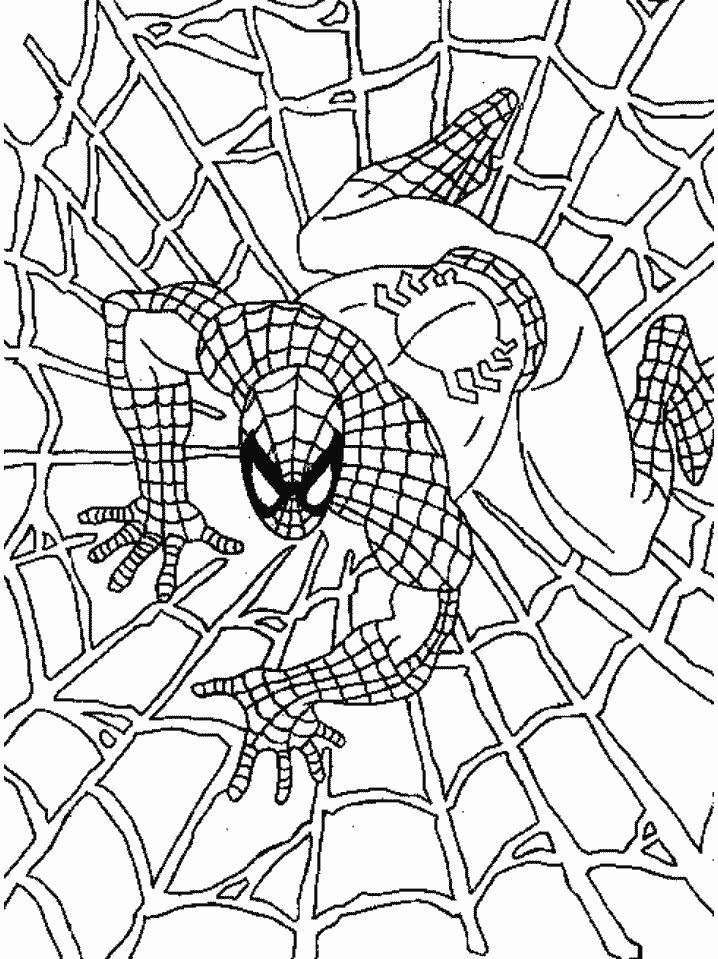
Spider-Man Lapbook


My youngest is currently interested in Spider-Man and wanted mom to create a Spider-Man lap book. At first, I was concerned because what educational value could Spider-Man possibly have? But, after doing a bit of research I found a great deal of educational elements that I could look at with my son.


The first, most obvious, direction was the origin and creation of comic books. It was actually quite interesting how they got their start. I made mini books on the origin of comic books and a vocabulary book for the different parts of the comic book and one on the different jobs it takes to make a comic book. I also made a book on New York City because this was the setting for the Spider-Man story.


Of course, I had to make a few books that were specific to Spider-Man. I created mini books on Spider-Man's "villains", his "partnerships", and his "abilities and weakness". My son used one of his many Spider-Man to fill in this information. He had a great time showing me all of his "Spider-Man Knowledge"!


I found a number of great web sites with information and two that my son really enjoys because they allow him to create his own superhero and his own comic book.


Wednesday, October 21, 2009

Botany Notebook


We decided to do Apologia Botany this year for our science class. I really love Apologia mainly because I can use it with all three of my children at one time. I decided to create my own Botany Notebook to go along with the note booking activities that Mrs. Fulbright details in her chapters. We have been working through the notebook so far this year and it is working beautifully.


To supplement, I added a lap book of Carnivorous Pants from Dynamic2Moms. It was really well made and interesting for the kids. I even bought a Venus flytrap from our local nursery so the kids could watch science in action!:) I actually caught a fly in my house and fed the plant so the kids could see how it traps the insect. It was really fun.


I also thought that it would be a great idea to go to our city's botanical gardens. I set up a field trip to go and it ended up being a gorgeous day. I made the kids find four of their favorite plants/flowers and I took a picture of the child with each plant/flower. I plan for them to include these pictures in their botany notebook. My favorite part of the botanical gardens was the orchid exhibit. It is amazing the diversity of these flowers! My children's favorite part of the gardens was the Venus flytraps and pitcher plants.

Here are a few of the great web sites that I found when compiling my materials for this study:
http://www.fs.fed.us/r6/uma/urban/ -wildflower coloring book

Monday, October 19, 2009

Fall Bridal Shower Decor

I am including this on my blog because when I was looking for ideas to use while decorating for a bridal shower, I could not find anything online. I used just about everything I could find around my house for decorating the table scape. Lucky for me, majority of my color scheme in my house is fall-like colors: yellow, burgundy, and brown.


The table scape was easy to create with a few shoe boxes and a chocolate brown flat sheet that I had on hand. A few years ago I was on a pumpkin bent so I have a lot of fake pumpkins of various sizes and colors. I coupled these pumpkins with candles that I already had for added atmosphere around the table. I must give a lot of the credit to my Mother-in-law because she is a genius with putting things together and really has unbelieveable vision.


As you can see, I found a bag of raffia and went a little crazy with it. I found myself puttingit on everything!:)


I grabbed two pumpkins at Wal-Mart for around $4 each and two containers of mums that are HUGE for $12 at the grocery store. I plan to carve the pumpkins with the kids when it gets closer to Halloween, and the mums will give my porch nice color for a few weeks at least.


All in all, it was a nice shower decor and fairly cheap to pull off.

Tuesday, October 13, 2009

Organize me, please!


I am definitely not an expert in the field of organizing- just ask my family! I try to be organized just to maintain a level of sanity in my house. Here are a few tips that I have come up with on my own and a few that I have shamelessly stolen from others! Enjoy.

School for multiple children
-Planning
· Try to determine what curricula that you can do together (science/Apologia, history/Story of the World, Bible, Geography)
· Keep in mind what really “must” be accomplished and focus on getting that done and don’t worry about the “extras” (For example, Latin or logic- Sure, they are great but focus on math and reading first.)
· Some subjects do not need to be grade specific during the elementary years
· You can vary the expectations depending on age/ability without making more work or planning for yourself
· Utilize a lesson plan form that incorporates subjects done together
· Here are a few great websites to help in this area: http://www.thehomeschoolmom.com/gettingorganized/planner.phphehomeschoolmom.com/gettingorganized/planner.php , http://www.thehomeschoolmom.com/gettingorganized/000049.php , http://www.thehomeschoolmom.com/gettingorganized/allplanners.phpchoolmom.com/gettingorganized/allplanners.php , http://homeschooling.about.com/cs/recordkeeping/ht/htrecords.htm , http://momishome2.blogspot.com/2008/07/how-to-example-of-mid-range-planning.html , http://www.homeschoolblogger.com/bbullard/646197/ , http://www.naturemoms.com/lesson-planning-for%20homeschool.html

-Scheduling
· Start your day with the subjects that you can do together as a family
· Look at the remaining subjects for each child and determine which ones need your supervision or one on one instruction
· Schedule the subjects for each child while trying to alternate between the independent and dependent subjects
· For example, if one child is doing their parent centered subjects first, then have the other children doing their child centered subjects and then alternate.
· You should only be working one on one with one child at a time and the other children should be self-teaching.
· Post each child’s schedule where they can see it during school so that they know what is next on the agenda.
· Introduce the idea of the “Mystery Folder”- Each child has a folder for them with independent “seat” work that they can complete if they are finished with their other work and are waiting on mom to finish working with a sibling. This work should be educational but fun so that the child does not dread doing it.
· Here are a few websites to help in this area: http://unafamiliaalaskena.blogspot.com/2009/02/individual-work-in-homeschool.html , http://pocketsoftime.blogspot.com/2008/06/friday-meme-how-do-you-schedule.htmltsoftime.blogspot.com/2008/06/friday-meme-how-do-you-schedule.html , http://thepreciousmind.blogspot.com/2009/02/5-minute-homeschool.htmlousmind.blogspot.com/2009/02/5-minute-homeschool.html , http://heartofwisdom.com/blog/homeschool-planning-how-would-Jesus-schedule/isdom.com/blog/homeschool-planning-how-would-Jesus-schedule/ , http://www.homeschoolblogger.com/kristenph/669878/w.homeschoolblogger.com/kristenph/669878/ , http://organizedhome.com/time-management-homeschool-familiesement-homeschool-families


-School Work Space
· If possible, have an area for each child’s books. You can use shelving, plastic crates, boxes, or whatever works best for your school space.
· This is their area that they must keep organized. Give them the tools they need, but they are responsible for keeping up with what they have.
· Don’t be too authoritative over this area. Give them control over their work space.
· Let each child make their own clipboard so that they can make their work transportable.
· Have a designated area for materials that are used outside of school time but still need to be accessed by the kids every day. For example, have a special basket for their piano notebooks. Along with that, have a three ring notebook for their piano music so that you do not have loose papers flying around the room. If you have a family reading time, have a basket in the reading area with the books everyone is reading.
· Here are a few websites that can help in this area: http://organizedhome.com/storage-strategies-homeschool-families , http://www.homeschool-curriculum-for-life.com/organize-your-homeschool.html , http://www.educationbug.org/a/creating-a-homeschool-area.html , http://www.howtodothings.com/education/how-to-create-a-home-school-classroom , http://www.homeschool.com/articles/Calvert/default.asp , http://www.associatedcontent.com/article/101616/how_to_create_a_homeschool_room_in.html?cat=30associatedcontent.com/article/101616/how_to_create_a_homeschool_room_in.html?cat=30

-Chores/Cleanliness
· Use a week calendar to designate the chores each child is to do for each week day. I make two different weeks and then alternate them each week so that they children are doing different chores every other week.
· Set a specific time for chores to be done; for example, after school work is completed.
· Do not allow play time until chores are completed to your satisfaction.
· Make sure that your child understands what “clean” is. An interesting way to do this is to clean the area yourself and have the child watch you do it and let them help organize their stuff. Then take pictures from various angles around the room. Develop the pictures and mount them on a piece of paper and place them on the back of the room door. When the child is asked to clean the bathroom, refer them to the picture so that they understand that the bathroom is not clean until it looks like the pictures on the door.
· Designate an area of your house where each child has a “box” for their stray items that you inevitably will pick up during the day. At the end of each day, have each child empty their box and put all of the items in their place. I have a box for each child on the stairs and when I am walking around the house during the day and see an item I pick it up and drop it in their box. Then it becomes their responsibility to put it up, not mine.
· Give each child a small laundry basket for their closet. They must keep their dirty clothes in the basket. Choose a Laundry day for the chore calendar and have each child bring their basket downstairs to be washed. Depending on the age of the child, you can teach them how to wash their own clothes. If they are not old enough, you can wash, dry, and fold their clothes and place them in their basket. After you are done, they must take their basket to their room and put up their own clothes. Even young children can do this with a little guidance.
· Here are a few websites that offer help in this area: http://www.homeschool-curriculum-for-life.com/free-printable-child-chore-charts.html , http://www.homeschool-curriculum-for-life.com/free-printable-child-chore-charts.html , http://www.homeschool-curriculum-for-life.com/free-printable-child-chore-charts.html , http://www.homeschool-curriculum-for-life.com/free-printable-child-chore-charts.html

-Allowance
· If your family chooses to do an allowance for your children, designate a payment day every week.
· Have the oldest child keep a payment log book (notebook) where he/she can record the date of payment and amount paid to each child. Sometimes it could be helpful to count what is in the container before hand to make sure that the correct amount is in Give and Save. Sometimes my kids have snuck out a little to supplement some purchase!
· Provide three small containers for each child for Give, Save, and Spend written on them.
· After payment is given, have each child deposit the agreed upon amount of their allowance in each container.
· Here are a few websites that can help in this area: http://www.kidsmoney.org/allart.htm , http://www.prosperity4kids.com/allowance.shtml , http://primary-school-lesson-plans.suite101.com/article.cfm/an_elementary_classroom_allowance_program , http://life.familyeducation.com/allowance/jobs-and-chores/34438.html , http://www.activeallowance.com/

Household Duties
-Meal planning
· Create a menu for each week of the month and number them 1-4.
· Based on the weekly menu, make a grocery list with any items need for the recipes that you have chosen for the menu. You can also add to your list any items that you need to purchase weekly (milk and bread).
· Think about your weekly schedule when you are creating your menus. Will you be tired from practice on Tuesday night? If so, then plan a meal that you can cook ahead in a slow cooker so that it can be ready when you are. Don’t put yourself in a position where you are exhausted and have to come home to cook over a hot stove and fighting kids!
· On Sunday, place the weekly menu on the refrigerator so that everyone can see what is for dinner so they can stop asking every five minutes!
· Try to find a day of the week that your family can do something fun for dinner; maybe you can have a Friday night pizza night or a Tuesday night breakfast for dinner night. IT will give the kids something to look forward to.
· Here are a few great websites to help in this area: http://www.menus4moms.com/ , http://www.thehomeschoolmom.com/pdf/menuchoretodothsm.pdf , http://www.homeschool-curriculum-for-life.com/menu-planning.html , http://www.heartofwisdom.com/heartathome/homeschool/homemaking/menu-plan-monday/ , http://organizedhome.com/printable/household-notebook/weekly-menu-planner , http://organizedhome.com/kitchen-tips/menu-planning-save-time-kitchen , http://www.vertex42.com/ExcelTemplates/meal-planner.html , http://www.hillbillyhousewife.com/menuplanning.htm , http://orgjunkie.com/

-Calendar organizing
· Every Sunday night create a “To do” list for the week. Make different categories for yourself- “To Call”, “To Email”, “To Pay”.
· Keep one central calendar that everyone can see and update it once a week.
· Whenever you get an invitation, email or make an appointment, write it down on your calendar right away so that it is not forgotten.
· Leave yourself margin in your day. Don’t think just because you have an hour that is unaccounted for that you must squeeze something into it!
· Give yourself a head start when going somewhere. If you need to leave at 12:00 start telling the kids to get ready to go at 11:30. This gives them time to get all of the necessary things ready and on their bodies without causing you unnecessary stress. Kids do not have the foresight of adults. They cannot plan ahead as well as we can.
· Here are a few websites to help in this area: http://momishome2.blogspot.com/search/label/calendars , http://www.homeorganizeit.com/organizedhomeschooler.html , http://www.donnayoung.org/calendars/index.htm , http://712educators.about.com/od/lessonplans/ht/lesson_calendar.htm

-Email/Phone Calls
· Designate a time during your day to do email and phone calls.
· Do not answer the phone during school time unless it is an emergency. Our answering machine message tells each caller that school is in session and calls will not be returned until 2:00 every day.
· Remember not to get stuck in front of the computer for long periods of time. We do not want our kids with their noses in the computer for hours at a time, so remember that they learn more from what they see you doing than from what you are telling them.
· Do not feel like you have to respond to every email. Hit the important ones first and if you can get around to the others, great.
· REMEMBER- email and telephone are for YOUR convenience not to be a shackle around your neck.
· Here are a few great web sites to help with this area: http://www.thehomeschoolmom.com/gettingorganized/timemanagement.php , http://education.more4kids.info/66/homeschool-time-management/ , http://www.homeschoolviews.com/askamom/askamom-sept05.html , http://eclectichomeschool.org/articles/article.asp?articleid=319 , http://www.articlesbase.com/homeschooling-articles/time-management-homeschooling-some-useful-tips-939960.html

-Housework
· If you can do it in less than two minutes, do it right way. Do not stack it up on the counter- put it away.
· Make your bed first thing; it makes you feel like the house is cleaner!
· Remember that you do not have to be able to eat off of the floor for your house to be clean. Good enough is just that- Good Enough!
· Your kids will never remember how clean your house is, only how much you love them!
· Great websites for ideas on this area: http://www.flylady.net/ , http://www.achristianhome.com/Homemaking/Where%20do%20I%20start.htm , http://www.suite101.com/article.cfm/early_learning_at_home/62377 , http://www.home-school.com/Articles/phs12-kathyvonduyke.html , http://organizedhome.com/home-management-homeschool-families , http://www.homeschool-curriculum-for-life.com/house-cleaning-tips.html , http://www.homeschool-curriculum-for-life.com/organize-your-laundry.html

Monday, September 14, 2009

Art Exploration Co-op Curriculum and Lapbook

This is phase two of my curriculum creations for our co-op this semester. The ladies in our leadership group decided for our co-op to do an art class this semester. We did not want just any kind of art class. We wanted an art class that touched on art history as well as hands-on art activities. The curriculum and corresponding lapbook are my attempts to touch on all of the areas that these ladies wanted to explore in our art curriculum this year.

I decided to hit a few of the major artists- there are so many! I chose Monet, Van Gogh, Picasso, Warhol, and Pollock because of their vast differences from each other.

The lapbook and curriculum begin with mini books on the elements of art and mediums of art. The kids did a great edible color wheel project that I found on http://www.princetonol.com/groups/iad/lessons/elem/elemlessons.html. This is a great art lesson plan site. I found many of the hands-on activities that we will be doing on this site.


After this lesson, we get into the nuts and bolts, so to speak, of the art history. Every two weeks or so the kids learn about a new artist, their movement, and their famous works. I created mini books to go along with each of these aspects. One week they learn about the artist, etc and then the next week the create a masterpiece of their own based upon one of the artist's own masterpieces.


Here is an example of the kids' rendition of Monet's "Waterlilies".


We are culminating our co-op study with a visit to the local art museum for a Da Vinci exhibit.

Here are some of the web sites that I found during my research that are just awesome! I hope you have fun exploring!:)
Art Exploration

http://www.princetonol.com/groups/iad/lessons/elem/elemlessons.html - great lessons (we incorporated some of them)
http://homeschool.withpurpose.com/category/fine-arts/art/- plans
http://www.moma.org/wifi- Museum of Modern Art audio tours
http://pixilatedschoolnotes.blogspot.com/2007/09/learning-about-art-van-gogh.html- Van Gogh
http://ebeth.typepad.com/serendipity/2008/07/a-is-for-art.html- blog with a lot of great links on Da Vinci
http://www.alifetimeofcolor.com/play/leonardo/index.html- Da Vinci
http://www.princetonol.com/groups/iad/links/artgames.html- activities and games
http://www.artcyclopedia.com/- encyclopedia of artists and movements
http://www.donnayoung.org/art/draw1.htm- drawing class
http://www.kinderart.com/arthistory/- links to other art sites
http://www.artprojectsforkids.org/search/label/2nd%20grade - blog with great art projects
http://www.homeschoolinthewoods.com/WebLinks/weblinks-artmusicpoetry.htm - art links
http://gardenofpraise.com/art.htm- lessons on famous paintings
http://www.notebookingpages.com/index.php?page=Free-Art-Music-Notebooking-Pages- notebooking pages
http://lifeisnotacereal.blogspot.com/2008/12/primary-level-artist-appreciation.html- 36 week art curriculum
http://picturingamerica.neh.gov/- famous American artists
http://www.lessonplanspage.com/Art45.htm- lessons
http://locicero.net/teachrembrandt/ - Rembrandt Teaching Project
http://school.discoveryeducation.com/lessonplans/programs/da_rembrandt/- Rembrandt lesson plans
http://tagfoot.com/jimmie/bookmarks/artiststudy - bookmarks to more sites
http://tagfoot.com/jimmie/bookmarks/art- bookmark to more sites
http://www.geocities.com/preciousdays/artstudy.html
http://members.aol.com/TWard64340/Index.htm Art Takes Time
http://arthistory.about.com/
http://www.coreknowledge.org/CKproto2/resrcs/lessons/01_PreK_Picasso.pdf Picasso
http://www.redshift.com/~bonajo/art_american.htm
http://falcon.jmu.edu/~ramseyil/arteducation.htm
http://intranet.cps.k12.il.us/Lessons/StructuredCurriculumTOC/SCArt/scart.html Complete Courses K-12
http://www.amblesideonline.org/ArtSch.shtml Complete Course adaptable K-12
http://www.ckcolorado.org/lessons/art.asp List of units based on the What my “nth” grader needs to know book series.
http://www.libsci.sc.edu/miller/folkart.htm
http://homeschooling.about.com/library/blmufine.htm
http://www.edhelper.com/DailyThemes_March_6.html
http://www.edhelper.com/DailyThemes_July_22_2.html
· Collections of Lesson Plans
1. http://www.lessonplanspage.com/Art.htm K-12
2. http://www.princetonol.com/groups/iad/lessons/lessons.html
3. http://members.aol.com/powers8696/artindex.html
4. http://www.montessorimaterials.org/mus.htm
5. http://rollyo.com/dorioakes/lesson_plan_search/ Key term art returned 16000+ activities lessons and units
6. http://www.teachers.net/cgi-bin/lessons/sort.cgi?searchterm=art 213 lessons
7. http://www.mcrel.org/lesson-plans/arts/index.asp Activities designed to meet specific Standards!
8. http://www.primaryresources.co.uk/art/art.htm
9. http://www.ilovethatteachingidea.com/ideas/subj_art.htm
10. http://www.successlink.org/gti/search/results.asp
11. http://www.eduref.org/cgi-bin/lessons.cgi/Arts
12. http://www.eduplace.com/monthlytheme/january/art_activities.html with http://www.eduplace.com/monthlytheme/january/art_additional.html
13. http://www.teachersfirst.com/tchr-subj-date.cfm?subject=art&lower=1&upper=5
14. http://www.teachersfirst.com/tchr-subj-date.cfm?subject=art&lower=6&upper=8
15. http://www.teachersfirst.com/tchr-subj-date.cfm?subject=art&lower=9&upper=12
16. http://www.lessonplansearch.com/Visual_Arts/index.html
17. http://www.verybestkids.com/Categories/CraftsActivities/default.aspx
18. http://artsedge.kennedy-center.org/
19. http://www.easyfunschool.com/IndexArt.html
20. http://www.janbrett.com/activities_pages.htm
21. http://www.sraonline.com/index.php/home/curriculumsolutions/finearts/artconnections/historyculture/623
22. http://www.sraonline.com/index.php/home/curriculumsolutions/finearts/artconnections/artgallery/625
23. http://www.atozteacherstuff.com/Lesson_Plans/The_Arts/index.shtml
24. http://www.dltk-kids.com/
25. http://www.buyteachercreated.com/estore/search Search for Art got 61 results mot with usable sample pages.
26. http://www.enchantedlearning.com/artists Some activities require membership.
27. http://depts.washington.edu/chinaciv/tg/tgraph.pdf
28. http://www.menc.org/guides/guideindex.html
29. http://www.canteach.ca/elementary/finearts.html
· Individual lessons
1. http://www.teachingideas.co.uk/art/starry.htm Starry Night
2. http://www.reacheverychild.com/lessonplans/plan1.html